Blog Post #3
The Rocky Flats Plant, a former U.S. nuclear weapons production facility located about 15 miles northwest of Denver, caused radioactive
contamination within and outside its boundaries. The contamination primarily resulted from two major plutonium fires in 1957 and 1969.
A nuclear reactor produces and controls the release of energy from splitting the atoms of certain elements. In a nuclear power reactor, the energy released is used as heat to make steam to generate electricity.The principles for using nuclear power to produce electricity are the same for most types of reactor. The energy released from continuous fission of the atoms of the fuel is harnessed as heat in either a gas or water, and is used to produce steam. The steam is used to drive the turbines which produce electricity.The country's 100+ nuclear reactors produced 789 billion kWh in 2013, over 19% of total electrical output. There are now 100 units operable and five under construction. There are many pros and cons for nuclear energy.
Pros:
Lower carbon dioxide (and other greenhouse gases) released into the atmosphere in power generation.
Low operating costs (relatively).
Known, developed technology “ready” for market.
Large power-generating capacity able to meet industrial and city needs (as opposed to low-power technologies like solar that might meet only local, residential, or office needs but cannot generate power for heavy manufacturing).
Existing and future nuclear waste can be reduced through waste recycling and reprocessing similar to Japan and the EU (at added cost).
Cons:
High construction costs due to complex radiation containment systems and procedures.
High subsidies needed for construction and operation, as well as loan guarantees.
Subsidies and investment could be spent on other solutions (such as renewable energy systems).
High-known risks in an accident.
Unknown risks.
Long construction time.
Target for terrorism (as are all centralized power generation sources).
<script id="infogram_0_nuclear-energy-39" src="//e.infogr.am/js/embed.js" type="text/javascript"></script><div style="width:100%;border-top:1px solid
 Many citizens argue that that bad outweigh the good. However, when we look at the amount of energy our nation is using we must consider that fact that nuclear energy has provided a conduit for other resources to be produced that will benefit the country. They have produced energy to power the world for years that beat out the competition of greenhouses.
http://www.world-nuclear.org/info/Country-Profiles/Countries-T-Z/USA--Nuclear-Power/
http://www.triplepundit.com/2009/02/nuclear-energy-pros-and-cons/
Erwin Schrödinger was an Austrian theoretical physicist who achieved fame for his contributions to quantum mechanics. In 1926 to describe the quantum state of a system, is his most enduring achievement at a more technical level. Schrödinger was born on August 12, 1887 in Vienna. His father Rudolf Schrodinger, who came from a Bavarian family, which had come to Vienna generations ago, was a highly gifted man. After studying chemistry at the Technical College in Vienna, Rudolf Schrödinger devoted himself for years to Italian painting and then he decided to study botany. He published a series of research papers on plant phylogeny. In 1927, Schrödinger left his position at Zurich for a new, prestigious opportunity at the University of Berlin, where he met Albert Einstein. He was an important scientist throughout history. The physicist was a brilliant and sophisticated example of how one should configure a pathway to grow and spark new ideas in physics.
To be able to have success in yourself you must be able to have success with those around you. I will make a difference in the world by working with those around me in my community and an enclosed environment. Those who see my success will then devote their time to help themselves. There will be help provided if needed and I will help them grow into bigger and better individuals. However, if they run into any problems in their personal life I will help teach them to triumph from it and learn from the curve that life has given them. We rarely need big things. As soon as someone starts talking about changing the world or radically reinventing something odds are good he’s talking from his ego, not his heart. Unless he’s working on bringing safety to the scared, health to the sick, or opportunity to the poor, the reinvention serves a want (or an ego), not a need. I devote myself to acknowledge the good in people and to grow as a community in every way, so that we are all given the same opportunities in life.
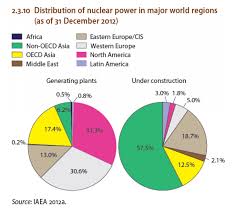

 Many citizens argue that that bad outweigh the good. However, when we look at the amount of energy our nation is using we must consider that fact that nuclear energy has provided a conduit for other resources to be produced that will benefit the country. They have produced energy to power the world for years that beat out the competition of greenhouses.
